A quick history lesson (WIP)
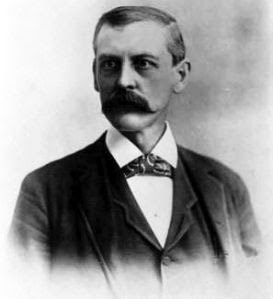
Seen here is a Sagittarius.
The name of said Sag is Mr. Willard Legrand Bundy Jr., and he was born on December 8, 1845 in Otsego, New York. As the first-born of Willard Douglas Bundy and Elizabeth R. Bundy, he [Jr.] went on to develop and patent many mechanical devices. One of importance would be the electric cash register, which he patented just weeks after turning 45 years old. Willard was known as a prolific innovator so another patent wasn’t a complete shock to those around him, but this invention in particular ended up sampling him some popularity. This mighty device systemized how laborers could punch-in and out of work, and was referred to as the time-clock.

For those who are on the younger side (or the more virtual side) of the workforce, it was more common for people to go into their place of work and “punch-in” their cards into a time-clock, to show when they would start and end their work day. It was a way for your boss to know you showed up (on time, or at all), and to give proof of any overtime pay to allocate. The time-clock was an aid in transforming the workforce, once known as a more organic and collaborative experience into a quantifiable, mechanical one and that transformation inadvertently created the existential dread that creeps up onto one during any given Sunday afternoon. Usually after downing a third mimosa glass, surrounded by loved ones.
The metaphysical violence that the tracking of time created was probably crafted by Willy Jr. on purpose for all we know; since this was around the time of the second Industrial Revolution. Picture this: assembly lines, railroads, child labor, a young man standing on a soapbox yelling about a newspaper headline, some soot, a lot of smog, more dust, and a whole bunch of labor. A product of this stature, and of this era, was bound to make business boom. Alongside the positive innovation, Willard also appeared to use his boundary-pushing Sagittarius energy to design a mechanism that eventually contributed to the drowning of others’ individualistic boundaries. And though that statement can be viewed as a bold one (and as anti-Sag rhetoric), it should also make us wonder what our own contributions have the ability to conquer and abolish. There’s a power, as well as a crux, of creativity: we shall never know the outcome of creativity until it leaves us to perceive the leftovers.
A painter’s sketch can be made to the most minute detail, but when the canvas is colored and dried it will be a result of the intention, the procrastination the painter bored, and the materials used. The same could be said about a man initially intending to add to his extensive list of clock-like patents and instead crafting a path within mass production.
The creative individual holds more weight than most give them credit for.
Related Articles
Stay updated with articles that explore design, strategy, and innovation.
